


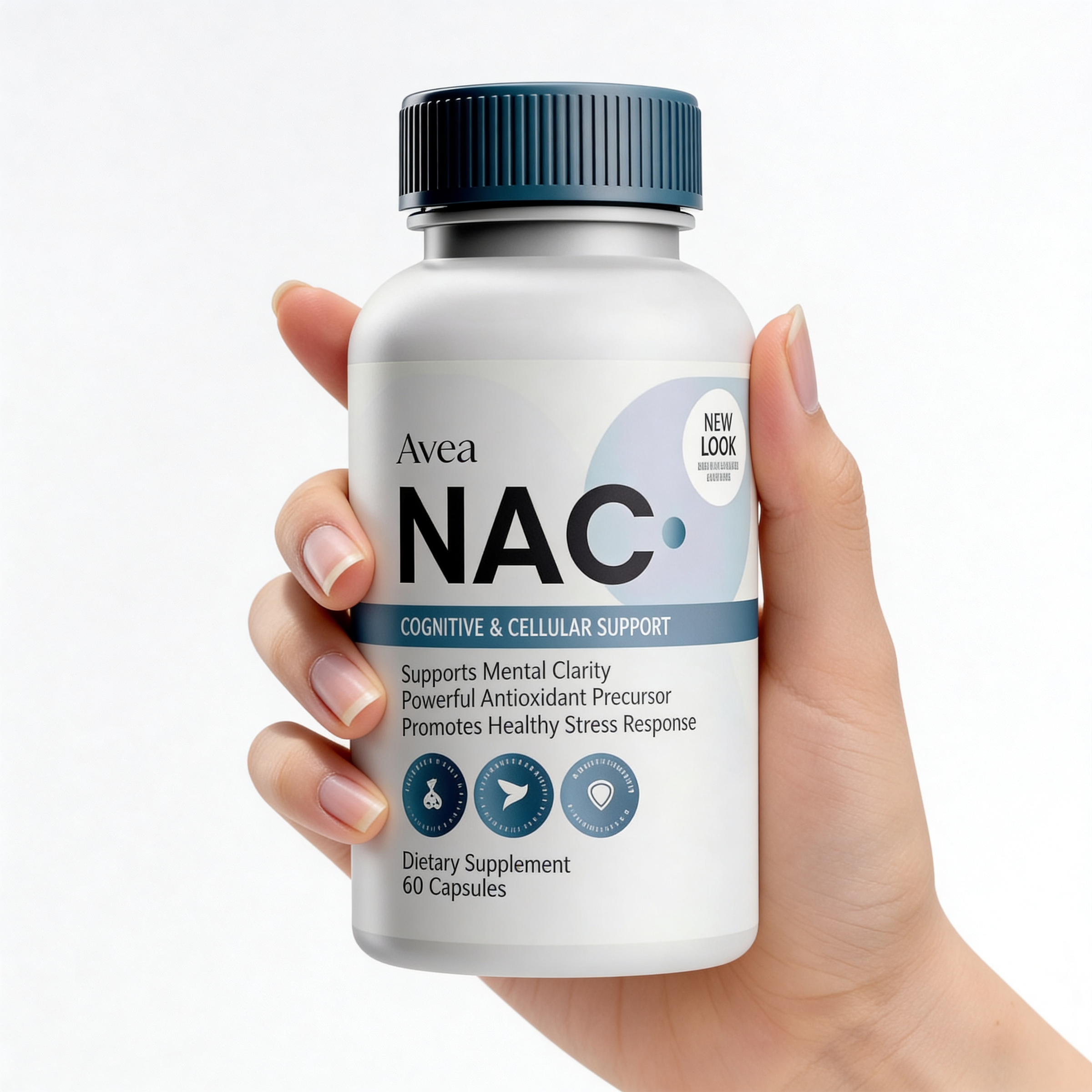
NAC Supplement For PCOS
Regular periods. Less hair shedding. Clearer skin. Less bloating. NAC replenishes the glutathione your PCOS depletes — supporting your cycle, your ovaries, and everything PCOS has been quietly taking from you. With many women reporting visible results within 2–4 weeks. Clinically studied. At the dose that actually matches the research.
Regular periods
Less hair thinning
Clearer skin
Less bloating
More stable energy
Better egg quality
Better insulin response
Helps with Facial Hair (Hirsutism)
Suitable for Perimenopause/Menopause
Low Stock
90-Day Money-Back Guarantee
Try it worry-free. If you're not satisfied, you'll get your money back — no questions asked.
Free Express Shipping
Easy Return Policy
Shipping & Returns
All orders are carefully packed and processed within 24 business hours by our fulfilment team. Free Express shipping on all orders. Easy 90-Day Money Back Guarantee — no questions asked.
Email us at onlinestorehelp3@gmail.com and we will handle the rest!
Suggested Use
Take 2 capsules daily on an empty stomach, as a dietary supplement or as recommended by your healthcare professional.
Got Questions? We've Got Answers
PCOS Relief is formulated to help manage symptoms associated with Polycystic Ovary Syndrome (PCOS). It is designed to support issues such as irregular periods, excess facial or body hair (hirsutism), acne, weight gain or difficulty maintaining weight, hormonal imbalance, and fertility challenges.
Results come in stages, and knowing what to look for in each window makes all the difference.
Weeks 1–3:Most women notice bloating reducing and mood stabilising first. Energy and blood sugar stability often improve early. The sulphur scent is strongest at the start and fades.
Weeks 3–8:Hair shedding typically begins to reduce. Skin may start clearing. If ovulation returns after a long absence, you may feel a mild pinching sensation mid-cycle — this is a positive sign, not a side effect. It means your body is learning to ovulate again.
Month 2–3+:Cycle regularity improvements build here. This is the window clinical trials measured pregnancy and ovulation rate outcomes from. Consistency through this phase is what separates the women who see results from those who stop too early.
One of the clearest signals it's working: you'll notice when you run out.
Yes. Important cautions include:
Only use as directed. Do not exceed the suggested dosage.
Pregnant or nursing persons, individuals under 18, or those with a known medical condition should consult a physician before using.
This is one of the most important questions to ask — and most brands don't answer it honestly. The majority of NAC products on the market are sold at 600mg per day. The clinical trials that showed improved ovulation and pregnancy outcomes in women with PCOS used1,200–1,800mg per day, typically split across two doses.
That's a meaningful gap. Taking 600mg may provide some benefit, but it doesn't reflect the doses the research was actually based on.
We recommend600mg twice daily— once in the morning and once in the evening, with food — bringing you to 1,200mg per day, aligned with the evidence. If you are working with a fertility specialist, 1,800mg per day (three doses of 600mg) has also been used in trials without safety concerns in healthy adults.
Absolutely. The fertility outcomes get the most attention in clinical research, but they all stem from the same root mechanism — and so do your symptoms.
Hair thinning in PCOS is driven by elevated androgens and chronic inflammation. Bloating is an inflammatory response, often compounded by insulin resistance affecting gut motility. Hormonal acne is caused by the same androgen excess. These aren't separate problems — they're the same fire showing up in different rooms.
NAC addresses oxidative stress and inflammation at the source, which is why women taking it for cycle support often report as a secondary surprise:less hair coming out in the shower, stomach no longer bloating after meals, skin starting to clear without changing anything else. You don't have to be trying to conceive for NAC to be relevant to you. If PCOS is disrupting your body, your confidence, and your daily life — that's reason enough.
They don't overlap — they work on completely different pathways, and this is one of the more interesting findings in recent PCOS research.
Metformin works primarily by improving insulin sensitivity and reducing glucose production in the liver. It is effective at what it does. But a 2024 clinical study directly comparing NAC and Metformin in PCOS found that while both improved hormonal markers like LH/FSH ratio and testosterone levels,only NAC significantly enhanced antioxidant enzyme activity in the ovaries. Metformin had no such effect.
This means if you are on Metformin and still experiencing hair thinning, skin issues, bloating, or irregular cycles despite your metabolic markers improving — oxidative stress in your ovarian tissue may be a separate, unaddressed driver. NAC works on that layer. Metformin cannot reach it.
The two are not just compatible — for many women with PCOS, they address genuinely different parts of the same condition.
Yes. NAC is well-suited for this life stage. As oestrogen declines, oxidative stress increases and insulin resistance can worsen — both areas where NAC provides direct support. Many women find it helps with energy, mood stability, and metabolic health during this transition.
Rated 4.8/5 I 10000+ Customers
Loved by 10.000+

I went seven months without a period. My doctor said lose weight and come back in six months. I left that appointment and went home and researched for three hours.I was already on inositol. Already eating well. Already doing everything right. Started NAC at 1,200mg a day and six weeks later my period came. Bright red, not brown spotting — an actual proper bleed for the first time in almost a year.I cried in the bathroom. I didn't think my body still knew how to do that.
Verified Rating

I'd been losing my hair for two years — clumps in the shower, bald patches at my temples, stopped wearing my hair up. I was already on inositol and berberine but my cycles were still 40–50 days and my hair kept going.Started NAC at 600mg twice a day. By week three the shedding had reduced noticeably. By month two my cycle came in at 31 days — the first time under 35 in three years. My skin started clearing too, which I hadn't even expected.Four months in and I'm not stopping. If you're on inositol and still not seeing changes, this was the missing piece.
Verified Rating

Okay so I was not expecting this one. I started NAC for my cycles and the bloating. The facial hair was just something I had accepted as my life — threading every three weeks, concealer in the meantime, never talking about it to anyone.About ten weeks in my threading lady asked if I'd been somewhere new. I hadn't. The regrowth was just slower and what was coming back was finer than before.I don't want to oversell it — I still go. But I used to dread the three week mark and now I'm stretching it to five, sometimes six weeks. For something I had completely written off, that's massive.
Verified Rating

I was eating less than everyone around me and still gaining weight. My doctor kept saying lose weight to fix your PCOS — but my insulin resistance was making that nearly impossible. Classic loop with no way out.Two months on NAC and the afternoon blood sugar crashes stopped. The cravings that used to derail me disappeared. I've lost 9 pounds without changing anything else — my body just started responding again.First supplement that actually felt like it was working with my body instead of against it.
Verified Rating
I went seven months without a period. My doctor said lose weight and come back in six months. I left that appointment and went home and researched for three hours.I was already on inositol. Already eating well. Already doing everything right. Started NAC at 1,200mg a day and six weeks later my period came. Bright red, not brown spotting — an actual proper bleed for the first time in almost a year.I cried in the bathroom. I didn't think my body still knew how to do that.
Verified Rating
I'd been losing my hair for two years — clumps in the shower, bald patches at my temples, stopped wearing my hair up. I was already on inositol and berberine but my cycles were still 40–50 days and my hair kept going.Started NAC at 600mg twice a day. By week three the shedding had reduced noticeably. By month two my cycle came in at 31 days — the first time under 35 in three years. My skin started clearing too, which I hadn't even expected.Four months in and I'm not stopping. If you're on inositol and still not seeing changes, this was the missing piece.
Verified Rating
Okay so I was not expecting this one. I started NAC for my cycles and the bloating. The facial hair was just something I had accepted as my life — threading every three weeks, concealer in the meantime, never talking about it to anyone.About ten weeks in my threading lady asked if I'd been somewhere new. I hadn't. The regrowth was just slower and what was coming back was finer than before.I don't want to oversell it — I still go. But I used to dread the three week mark and now I'm stretching it to five, sometimes six weeks. For something I had completely written off, that's massive.
Verified Rating
I was eating less than everyone around me and still gaining weight. My doctor kept saying lose weight to fix your PCOS — but my insulin resistance was making that nearly impossible. Classic loop with no way out.Two months on NAC and the afternoon blood sugar crashes stopped. The cravings that used to derail me disappeared. I've lost 9 pounds without changing anything else — my body just started responding again.First supplement that actually felt like it was working with my body instead of against it.
Verified Rating
DID YOU KNOW?
1-in-10 women in the US have PCOS & remain undiagonized by their doctors?
Excessive Facial Hair
Difficulty Losing Weight
Irregular Menstrual Cycles
Difficulty Getting Pregnant
Hormonal Acne
Mood Swings